Where golden deserts meet ancient fortresses and every horizon feels like a painting waiting to be ridden into.
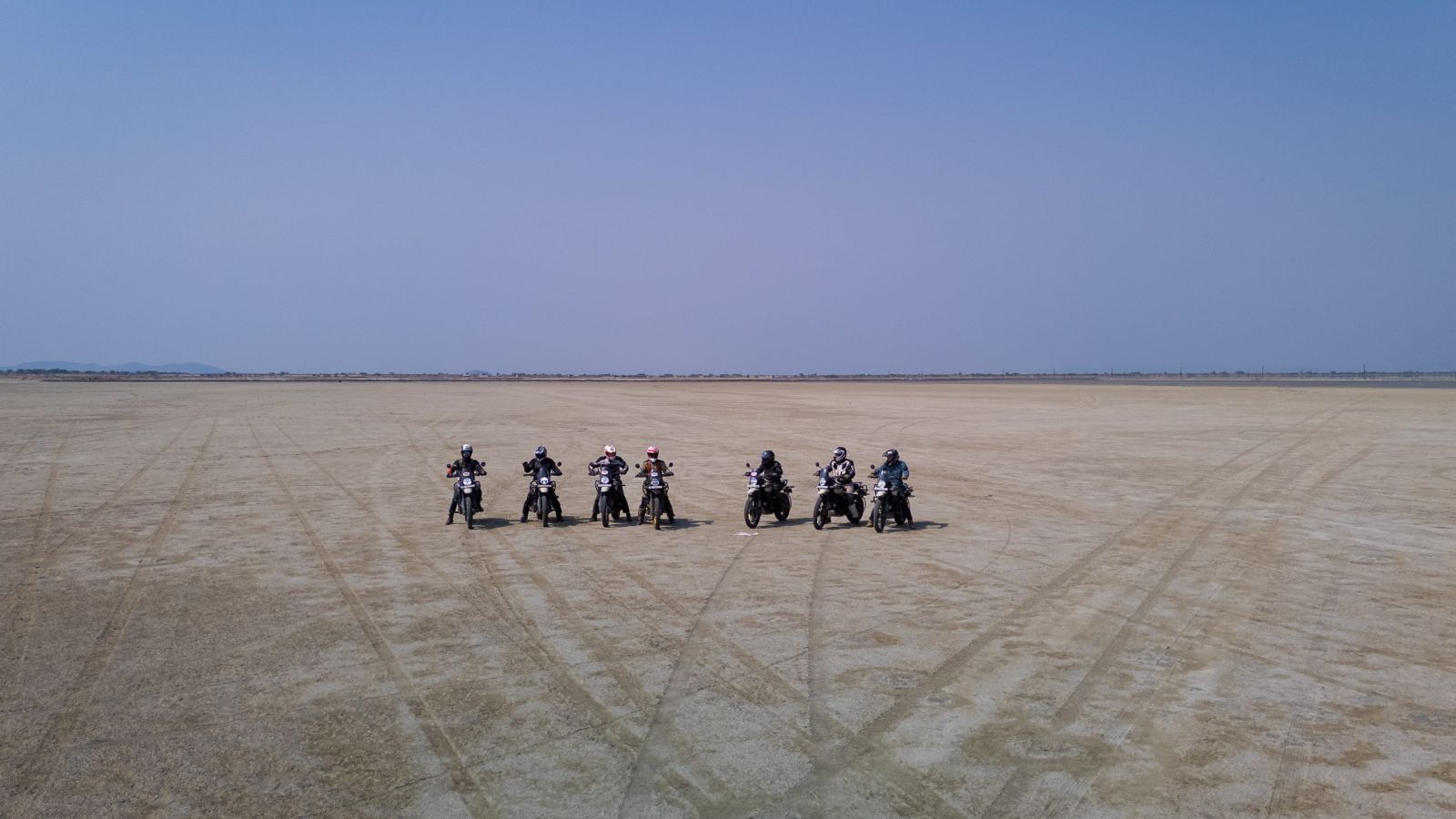
There is a specific kind of silence that only the desert knows. Not the absence of sound, but something fuller, a quiet so complete it feels earned. You find it somewhere between Jodhpur and Jaisalmer, when the city noise finally fades behind you, the tarmac gives way to dust, and the Thar Desert begins to swallow the road whole. This is Rajasthan at its most elemental: fire-coloured, wind-sculpted, utterly unapologetic.
What's It like to ride Jaisalmer Sand Playground?
Chasing the sand dunes of Rajasthan isn't just a travel bucket list item. Rajasthan Motorbike Trip is a rite of passage- a journey that pulls you across the edge of the Indian subcontinent into a landscape that feels as ancient as mythology and as alive as the people who have called it home for centuries.
Jodhpur: Where the Journey Begins
Before the dunes, there is Jodhpur that demands your full attention.
The Blue City rises from the desert plains like a fever dream. A tangle of indigo-painted houses, narrow alleyways loud with the clatter of chai stalls, and above it all, the impossibly grand Mehrangarh Fort, perched on a sheer cliff of volcanic rock as if it grew there naturally over centuries. Which, in a sense, it did.
Start early. Climb to the fort before the midday heat turns the stone terraces into griddles. From the ramparts, you'll see the blue sprawl of the old city rippling outward in every direction, and somewhere out there on the horizon, a faint shimmer- the beginning of the Thar. The desert is already calling.
Jodhpur rewards wanderers. Get lost in the Sardar Market near the clock tower, where the chaos is magnificent: towers of red chilies and turmeric, the sweet smoke of incense, merchants calling out over the noise, and every few minutes a camel threading through the crowd with a kind of ancient indifference. Eat at a rooftop dhaba. Order dal baati churma, the most famous Rajasthani cuisine- baked dough balls dunked in ghee and lentil gravy and eat it watching the sun turn the fort walls amber.
This is the rhythm Jodhpur sets: bold, unapologetic, alive. It's the perfect launchpad for what lies ahead.
The Road West: Into the Thar
The drive from Jodhpur to Jaisalmer covers roughly 290 kilometres on NH25- a stretch that begins in semi-arid scrubland and progressively unravels into something more severe and more beautiful. The vegetation thins. The sky grows wider. Occasionally, a lone tree appears on a vast open plain and looks completely surprised to find itself there.
It's on this road that the desert announces itself properly. The landscape flattens. The sand bleeds into everything- the roadside tea shacks, the tiny villages, the patches of farmland that appear between long stretches of golden nothing. By the time Jaisalmer's outline emerges from the haze, you will understand why the locals call it Sonar Qila- the Golden Fort.
Get to Know: Famous Sand Dunes of Thar- The Great Indian Desert
Jaisalmer: The Desert Capital
Jaisalmer sits at the heart of the Thar like a crown jewel forgotten in the sand. Built almost entirely from honey-yellow sandstone, the city glows in daylight and turns molten at dusk. The fort- one of the largest living forts in the world, isn't a museum piece. People actually live inside it. Families. Guesthouses. Temples. Restaurants. A city within a city, unchanged in its bones for nearly nine centuries.
Walk the fort's narrow lanes in the late afternoon when the light is thick and golden and the sandstone seems to emit a warmth of its own. Step inside the Jain temples- exquisitely carved, impossibly detailed, and utterly serene and feel the contrast with the bustle outside. Shop for handwoven textiles and embroidered camel leather goods from artisans whose craft has passed down through generations uninterrupted.
But the real reason you're here is just beyond the city limits. The real reason is the dunes.
Sam and Khuri Sand Dunes: Where the Sand Takes Over
The Sam Sand Dunes lie about 45 kilometres west of Jaisalmer, and getting there is a ritual as much as a destination. The road narrows. A convoy of jeeps and camels periodically appears. And then, without warning, the dunes rise- great golden waves of sand, sculpted by wind into forms that feel almost architectural.
Sam is popular. On winter evenings, it draws crowds for camel rides and cultural performances under the stars and there's a reason for that. The sunsets here are extraordinary, the kind that make photographs feel like poor substitutes for being there. The sky turns orange, then deep red, then a bruised purple as the desert temperature drops fast and the stars begin appearing in numbers you forgot were possible.
For something more remote and intimate, head to Khuri, a smaller village about 48 kilometres southwest of Jaisalmer. Here the dunes roll in closer to the village itself, there are fewer tourists, and you can genuinely feel the desert's weight and silence pressing in from every direction. Local guesthouses offer simple stays with dinner by firelight and folk music that sounds perfectly native to the landscape- haunting, repetitive, achingly beautiful.
The experience of the dunes shifts dramatically depending on when you go. Sunrise is different from sunset. Midnight under a full moon- when the sand takes on a silvery, almost metallic sheen- is different again. If you can, stay for all three.
Why Sam Sand Dunes?
The Desert is an Experience, Not a Backdrop. What separates the Thar from other desert experiences is the living, breathing culture woven into it. The desert here has never been empty, it has been the home of the Bishnoi people, famous for their 500-year-old tradition of environmental conservation; of folk musicians who carry entire libraries of storytelling in their voices; of nomads and traders whose ancestors made this same crossing for centuries before there was a road.
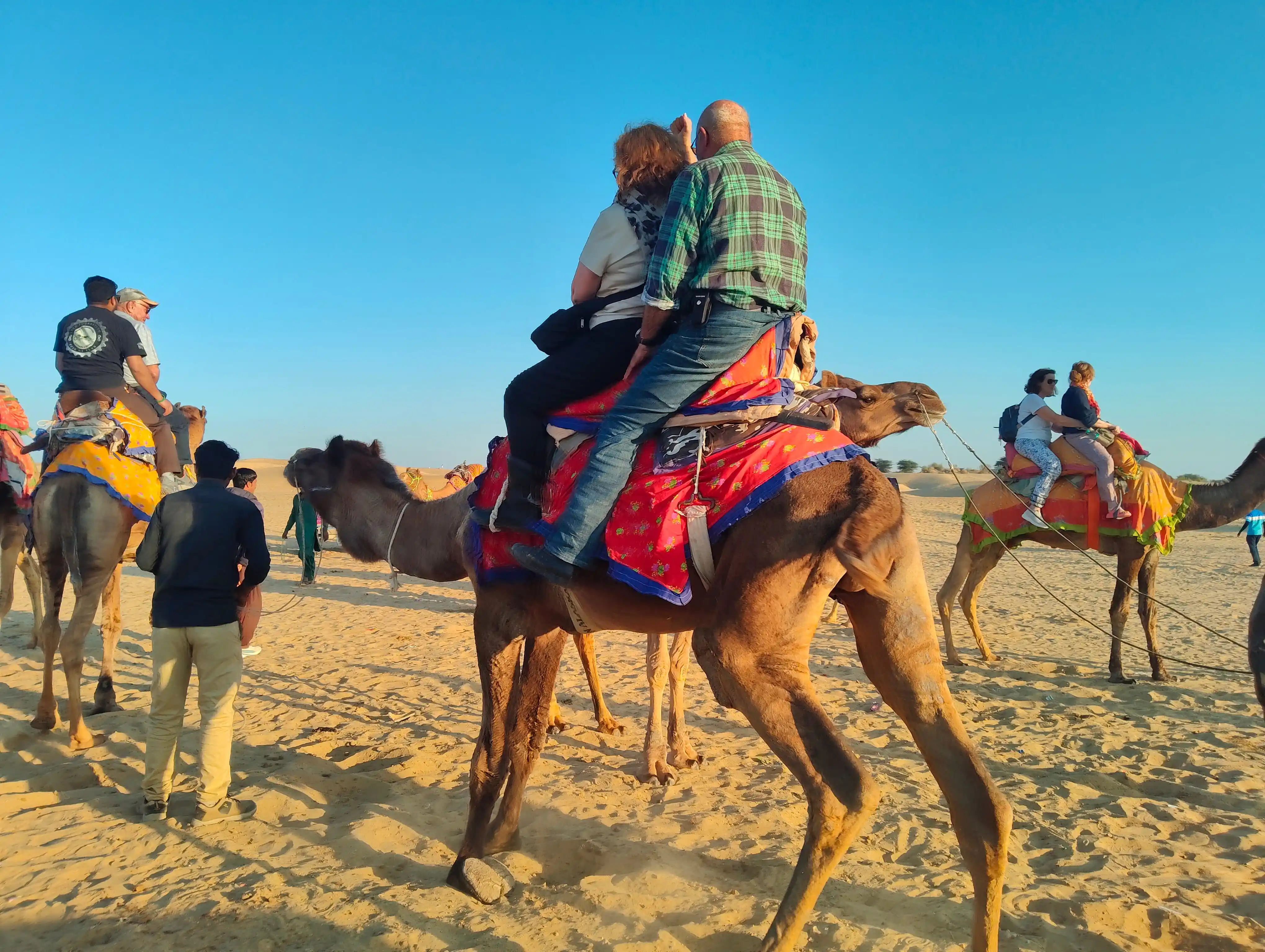
A jeep safari into the dunes doesn't have to mean speeding past all of this. Take stop at Bishnoi villages where blackbuck and chinkara deer roam freely because the community has protected them for generations. Visit craftsmen practising blue pottery and block printing in the same way their forefathers did. The desert becomes three-dimensional, not just sand and sky, but story. It is one of the most beautiful off-road motorcycle adventure trips in India.
Practical Notes for the Road
The best time to visit Jaisalmer and Jodhpur is between October and March, when temperatures are manageable and the light is phenomenal. April through June is brutal- the Thar can exceed 50°C and the desert stops being romantic very quickly.
From Delhi, Jaisalmer is well connected by overnight trains- the Jaisalmer Express is the classic route, arriving in the morning just as the city is waking up. Jodhpur is similarly connected and can serve as a natural first or last stop depending on your direction.
Within Jaisalmer, stay at least two nights. One night is never enough for experiencing in Rajasthan Dunes.
Suggested Read: Preparation Tips for Rajasthan Desert Riding
Why You Need to Go?
Every traveller has a landscape that rewires them a little. For many, it's the mountains. For others, the sea. But there is a specific transformation that happens in the desert- a stripping away of noise and distraction until what's left feels essential.
Rajasthan's sand dunes offer exactly that. Jaisalmer doesn't just show you the desert; it immerses you in a culture that has lived in dialogue with it for a thousand years. Jodhpur doesn't just give you a fort to photograph; it gives you a city still alive with craft, cuisine, and a kind of unrefined vibrancy that feels like a gift.
Chase the dunes. Watch the sun sink behind Sam. Eat dal baati in the blue lanes of Jodhpur. Wake up before sunrise when the sand is cool and firm and the light is still the colour of old gold. To join this exciting Motorcycle Trip in India, connect with us and explore the extraordinary.
You'll come back changed. And you'll almost certainly come back.
Best season: October – March | Jaisalmer Fort: UNESCO World Heritage Site